

I think that the reason people were so upset by this cover was because they don’t like it when their enemies are made to look like human beings.
The bombs that exploded near the finish line of the Boston Marathon ended the lives of three people. Dzhokhar and Tamerlan Tsarnaev walked through the crowded streets, set down their backpacks that were filled with home-made bombs (made of pressure cookers filled with ball-bearings, nails, and explosives from fireworks), and walked away from the devices that would soon take the lives of a 29 year-old restaurant manager named Krystle Marie Campbell, a 23 year-old Boston University graduate student named Lü Lingzi, and an eight year-old boy named Martin William Richard. In addition to the three people who died, the bombs sent destruction and shrapnel flying through the air and tearing through the flesh of hundreds of others. As is almost always the case when a bomb goes off, the number of people hurt by the blast is significantly more than the number of people who died—When the smoke cleared, 264 people were injured.
But what was also injured was our feeling of safety. Not just in Boston, but all over the country people had a feeling like the first time your apartment gets broken into in college, and you think to yourself, “I guess I’m not as safe as I thought I was.” So far this year, those were the only three people that have been killed inside of the United States by terrorist bombs.

Not very big….
Please take a moment to compare that with Iraq…. In Iraq, over 1000 people have been killed. Not so far this year–there were more than 1000 people killed by bombs LAST MONTH! All in a country that is smaller than the state of Texas. That means that if the ratio of killed to wounded were somewhere near what it was in the Boston bombing, there might be around 88,000 people who were injured in some way by bomb blasts in Iraq–maybe blowing out eardrums, maybe walking with a limp, maybe losing a limb or two–all in the month of July alone.

Imagine walking by something like this every day.
And these are people like you and me. They are people with families to take care of, and jobs that they don’t always love. People who hate the idea of someone setting off a bomb to make some sort of demented political or religious statement. People who are just living their lives, but now the new normal in their lives is news stories like one that closed down Boston for two days and had the rest of us glued to our TVs, except they see those stories EVERY DAY. Their new normal is being stopped at portable security stations and being patted down to look for bombs before you are allowed to enter places like malls or shopping centers. Their new normal is going to work thinking, “I hope I don’t get blown up today,” and walking past the wreckage of recent explosions. Their new normal is knowing someone personally who has been affected by a bomb.

I love Boston as much as the next guy….
I know a person who was in the city of Boston when the bombs went off, and I felt like that somehow gave me more of a connection to that tragedy. I would even tell people about it: “I have a friend who was IN BOSTON the bombs went off!” And people would genuinely be like, “Oh, wow.” And I’d shake my head, like “Yeah….” The more I think about this sort of thing, the more arbitrary it seems–Like if I felt more of a connection with and compassion for the people of Boston because Boston starts with B, and so does my last name….
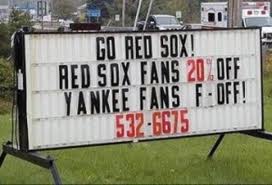
Yay our team! Screw everyone else!!!
I’m not really sure what my point is. It’s certainly not to suggest that the Boston bombing wasn’t horrific and tragic. It obviously was. Maybe it’s just to provide some perspective. Sometimes it seems like we only care about people on “our own team.” Lü Lingzi, the graduate student who died in the bombing, was a Chinese national. Imagine if her death was looked at as something less than the others because she was born in China. But there are news stories about explosions in Iraq every single day–20, 30, 50 people dying every day. And I’m starting to figure out why these stories aren’t affecting me like the stories of the three who died in Boston. It’s because I obviously don’t care.
And I think about the man standing before Jesus, asking him, “Who is my neighbor?”

May we look as much like Jesus as this burnt frying pan. I assume they were cooking bacon…. The most heavenly meat.
I think that the Church looks the most like Jesus when it genuinely loves and cares about the people who don’t look or believe anything like we do–And not in the hopes of some sort of “conversion,” but just because we recognize that those people are our neighbors. Because the more we get to know God, the more we understand how God looks at folks who don’t look anything like us–He looks at them like they are his kids. And he loves them like his kids. And if we know God, we do too. God doesn’t care about borders or languages or ethnicity…. He cares about us. All of us. I don’t believe God wants the Church to convert Muslims (or anyone else) to Christianity–I believe he wants the Church to look like Jesus. And when our hearts break for people who live every day in fear of yet another bomb, we look like Jesus. When our hearts break for kids who have gotten used to the sound of drones flying through the air, we look like Jesus. When our hearts break for the girls who aren’t allowed to go to school in countries that we call our allies, we look like Jesus. And when we stand up and demand justice and religious freedom for our Muslim brothers and sisters right here in the United States, we look like Jesus.
So if you read the title of this post and found yourself caring about my neighbor’s death based solely on the assumption that he or she was from America, you might want to try looking at things differently. Try asking God to show you how much he loves the people in Iraq and Iran and Afghanistan and Syria and Egypt and Sudan. I believe he will. It probably sounds very foreign (pun intended) to many of you (this whole “loving your enemies” thing), but if the Church going to be worth anything to the world, it has to start really loving it. Our hearts break for those people in Boston, but may we be the kind of community whose heart breaks for suffering everywhere…. Not just suffering that slightly affects us and makes us feel less secure by inconveniently reminding us we are all going to die someday.





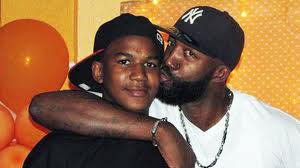




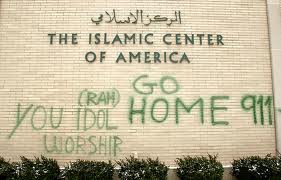
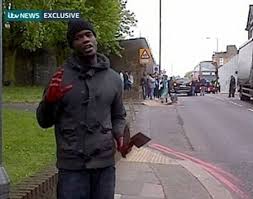












 The Boeskool
Don’t Read The Comments
I can’t seem to do either of these things….
That’s what everyone says, at least. If I ever mention something awful someone wrote in the Comments section of an online story, people are always like, “NO! Don’t read the comments!” But I still do. I can’t help it. Something in me cares about what is being said there. I think it’s that I’m hopeful. Hopeful that this story might be the one where people say things that are intelligent and kind, instead of things that are belligerent and hateful. Or, at the very least, maybe there will be a few people spewing hate and prejudice and lies, but THIS will be the one where the number of people opposing and standing up to the hate and prejudice and lies will dwarf the number of people giving those comments thumbs ups and likes and whatnots. I haven’t found it yet…. Maybe someday.
Paula Cooper–28 years after a fifteen year old girl was sent to death row.
I read this amazing story the other day about a man named Bill Pelke who worked most of his adult life to free a woman from jail. That woman’s name was Paula Cooper, and when she was 15 years old, she murdered Bill’s grandmother Ruth Pelke (a crime for which she was sentenced to death, because at that time in Indiana, you could be as young as ten years old and receive the death penalty). Cooper was physically abused as a child, she was forced to watch her mother get raped, and she was a chronic runaway. Even though Bill Pelke initially supported the death penalty (her sentence was later reduced to Life in Prison after they changed the death penalty age to 16), he became convinced that his Grandma would not want this woman rotting away for the rest of her life in prison. Bill Pelke “begged God to give him love and compassion for Paula Cooper and her family,” he forgave the woman who stabbed his Bible teacher Grandmother 33 times, and after 27 years in jail, Paula Cooper was recently released (You can watch an interview with Bill Pelke HERE). I was inspired. The people who left comments were not impressed.
If you have ever read internet comments before, you can imagine the kind of garbage that was written at the bottom of that story. Everything from racist diatribes, to laments about Paula Cooper breathing the same air as us, to promises by people to “kill her myself if I ever see her.” And then, to top it all of, the places where you can vote comments up or down were about 4 to 1 in favor of the hateful comments…. It was discouraging, to say the least.
“I’ve had it up to here with internet comments.”
The comments section on the internet is the cesspool of humanity. A few weeks ago when Cheerios decided to have a biracial girl on their commercial and showed a white mother and black father, they had to disable the comments because of all the hateful and racist crap people were writing. Something has got to change. These things that people are writing are not without consequence–They affect us, and they make the world more and more cynical–but there seem to be no consequences for the people writing the comments. It’s terrorism of the soul. People file this sort of thing under “Freedom of Speech” or “Right to Privacy,” but I don’t think it’s that simple. We have the right to privacy and we have the right to free speech, but we do not necessarily have the right to private speech. This stuff is speech without accountability, and it can be as harmful as any false “Fire!” in a crowded theater. Free speech is not designed to protect some anonymous semantic sadist, spraying words like rounds from a machine gun, attempting to hit as many people as possible. Its the same reason a man in a pointy, white hood feels emboldened to say things he would never say if his identity were exposed. At least if you say something racist in person you have the risk of getting punched in the face…. These hate-filled comments are the linguistic equivalent of dropping bombs from a remotely piloted drone.
His name is Sebastien De La Cruz, he is 11 years old, and he seriously rocked the National Anthem.
I’m not saying that I’m against free speech. I’m not. Individuals have the right to speech that the listener deems offensive and even hateful–I’m saying that there should be accountability. There has to be some way to register people for internet comments and insure the things people write can be traced back to a real person. So if you decide to write something so offensive and hateful that it makes the rest of us question whether there is any good in the world, maybe that comment is going to get back to your boss. Or your employees. Or your board of directors. This is a bit of what the Public Shaming Tumblr attempts to do–manufacture accountability for people’s words (Here is a list of offensive tweets about the Mexican-American boy who sang the National Anthem during the NBA Playoffs). The whole “Sticks & Stones” saying is full of crap–Words can hurt just like stones, and if you are going to be throwing those sorts of stones on the internet, you don’t have the right to do it from behind an anonymous white hood.
Still my favorite book ever.
On the way home from a recent trip, we stopped at a gas station in the middle of nowhere to take my kids to the bathroom. In the bathroom, written in very large letters on the door, were words that no kid (or adult, for that matter) should ever have to stumble upon. I thought of The Catcher In The Rye‘s Holden Caulfield trying to erase all the “Fuck you’s” in the world, but knowing there were just too many of them. I know we can’t get rid of all of them, but part of the reason we are part of a community is to keep each other accountable. I don’t have the skills it takes to create some sort of internet registration that verifies people’s identities before allowing them to comment, but someone does. If somebody could come up with a way to do this, that would be great. The conversations and discussions that can happen online can be good things, but lack of accountability aids those who only want injure HOPE. And that is a dangerous thing. If we are all going to be using the same bathroom, we might as well work together to keep it clean. And if not clean, we can at least try to point out who is putting all the crap on the walls….